When discerning tea drinkers search for the quality tea of Nepal, they are seeking an experience shaped by authentic agricultural integrity. True quality is not an advertising claim or a golden sticker—it is the direct outcome of elevation, careful hand-plucking, meticulous sorting, and transparent handling from estate ridge to teacup.
The Four Pillars of Tea Quality in Nepal
Evaluating premium tea requires understanding the four foundational pillars upheld by master tea makers across the eastern Himalayas:
1. Fine Plucking Integrity
Quality begins in the early morning dew on steep mountain terraces. Experienced pluckers select only the tender unopened terminal bud and the two youngest leaves immediately beneath it. Older leaves and thick fibrous stems contain high tannin concentrations that produce harsh bitterness; young buds, by contrast, are rich in sweet amino acids (especially L-theanine) and essential aromatics.
2. Whole Leaf Preservation
Industrial tea production tears and pulverizes leaves into dust and fannings to fill permeable bleached paper tea bags. High-grade Nepali tea, conversely, preserves whole leaves or neatly curled hand-rolled pearls. An unbroken leaf unfurls gracefully during steeping, releasing complex layers of flavor across three or more subsequent infusions rather than dumping tannins into the water within thirty seconds.
3. Purity & Botanical Cleanliness
Nepal's high-altitude tea gardens benefit from natural Himalayan isolations and crisp alpine winds, minimizing pest vulnerability. Pure quality tea is free from synthetic flavoring sprays, sugar coatings, artificial colorants, and heavy metals. When you drink Elamora, every cup contains 100% pure mountain harvest.
4. Hermetic Freshness Sealing
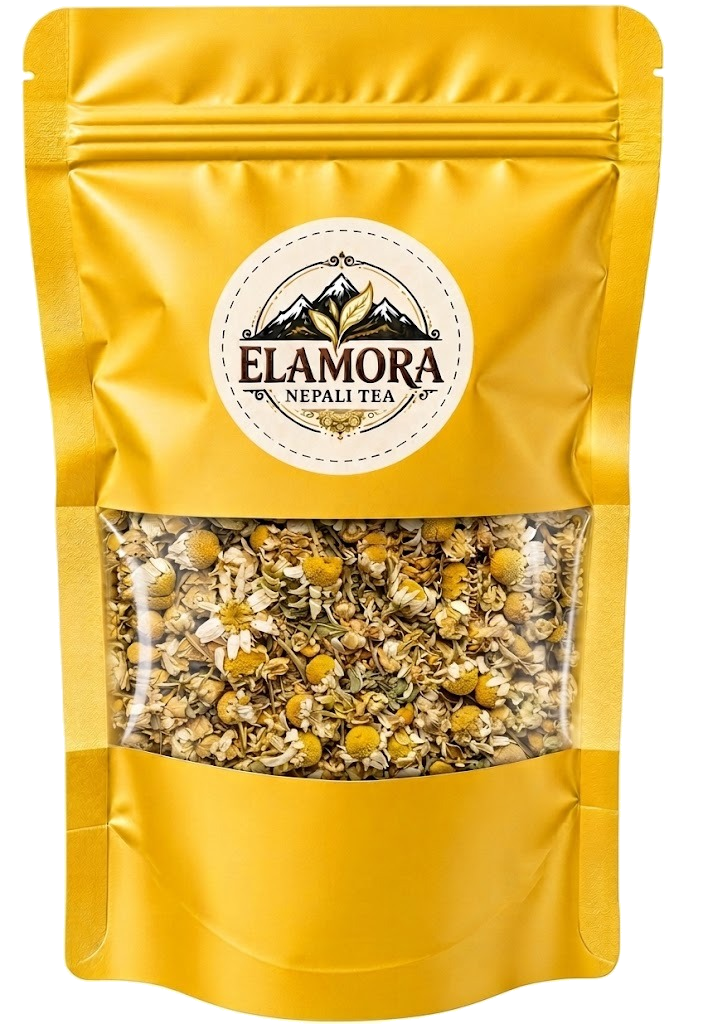
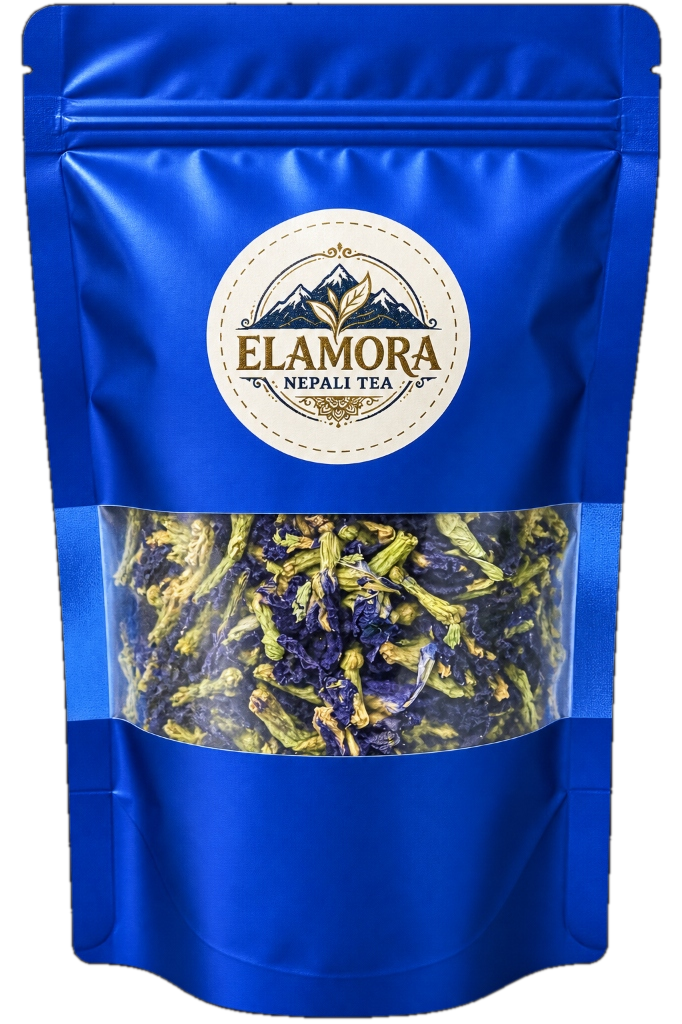
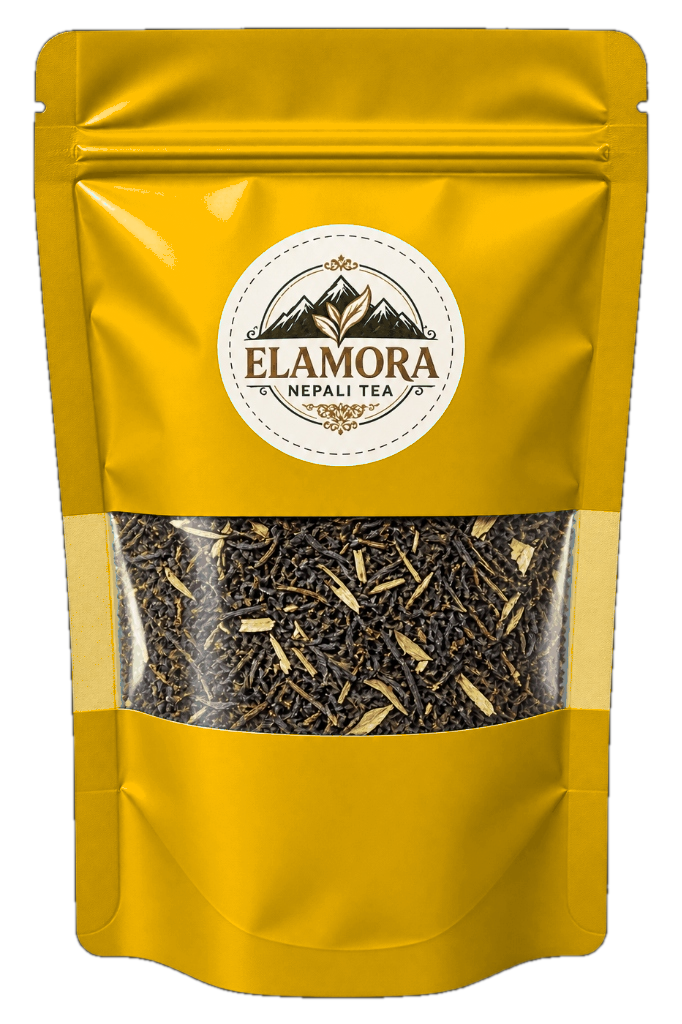
Tea is hygroscopic—it readily absorbs moisture, ambient smells, and degrades upon prolonged contact with oxygen and light. True quality requires immediate barrier packaging at the source. Elamora seals harvests in specialized opaque, multi-layer aluminum-barrier pouches with resealable airtight closures immediately upon lot allocation in Kathmandu.
Sensory Markers of Quality Tea
- Aroma (Dry Leaf): Clean, pronounced, sweet; reminiscent of dried wildflowers, malt, ripe stone fruit, or fresh alpine herbs. Zero chemical or musty undertones.
- Liquor Clarity: Crystal clear infusion free from muddy cloudiness or suspended dust particles.
- Mouthfeel: Velvety, smooth, and lingering, stimulating salivary glands with a sweet aftertaste (known as huigan in classical tea connoisseurship).
- Infused Leaves: Once steeped, the spent leaves should appear vibrant, supple, and intact, confirming genuine hand-harvested provenance.